faculties
Better experience in the app
- Get a reminder before the event starts
- Save & share with friends
- Discover similar events based on your taste
Get reminded
Choose when to get reminded by email.
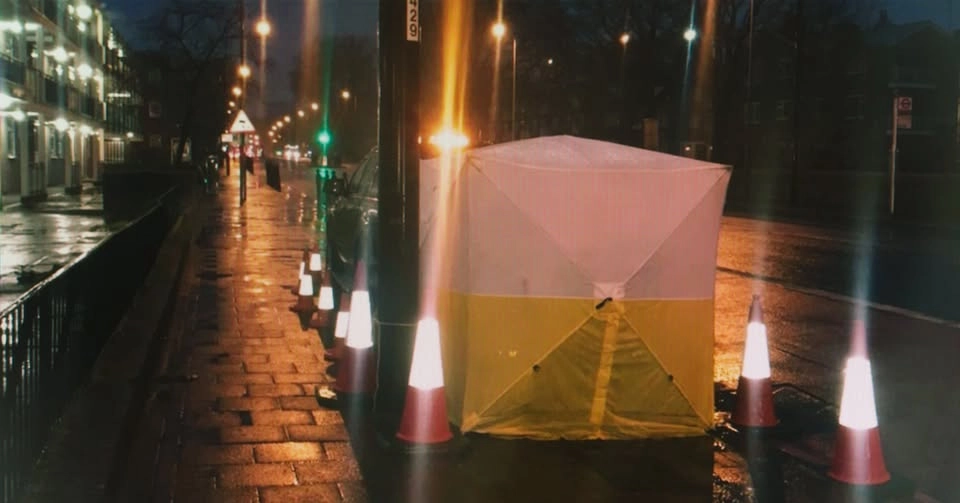
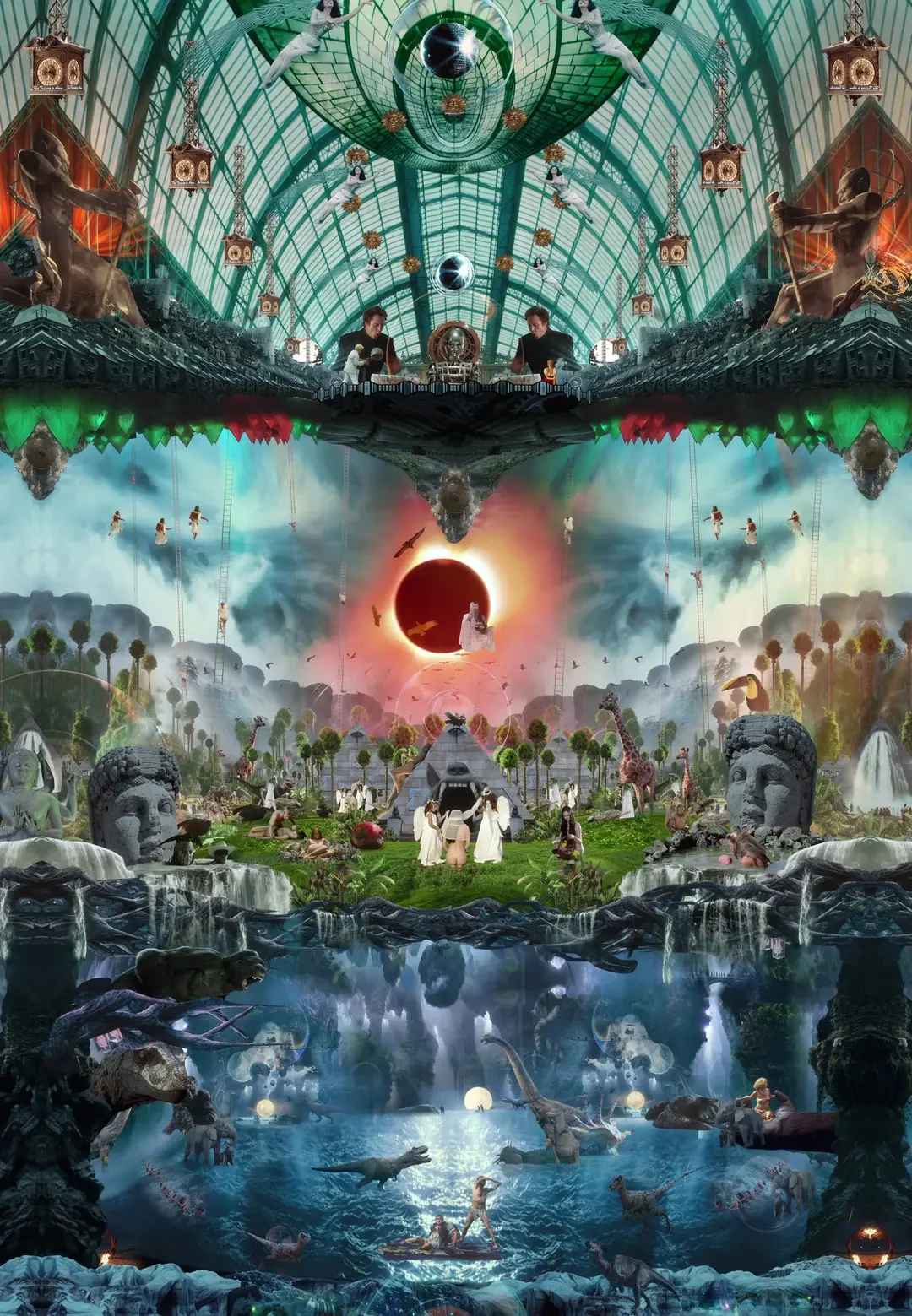
facultiesJoakim Sandqvist, DJ Shadow, Dziga Vertov5 – 6 June 2026Accelerator, Stockholm UniversityBergsund, Djurgårdsstrand 2Opening hours June 5 Accelerator: 11–17 Bergsund: 16–19 Opening hours June 6Accelerator: 12–16Bergsund: 16–19In 2018, a visit to Joakim Sandqvist’s studio in Malmö unexpectedly turned into an excursion to the city’s northern harbour area. Driving along desolate, oversized roads built for heavy trucks, the site unfolded as a kind of wasteland, a land reclamation area created by dumping demolition debris into the sea. We found ourselves on this excursion through a shared interest in trains and the visual culture surrounding the infrastructures and imaginaries of the post-industrial city. There is something about harbours. While they are nodes in a network, they also mark a border between land and sea, the fixed and the fluid, the known and the unknown.There is a myth that Immanuel Kant rarely, if ever, left Königsberg, though he was said to enjoy walking down to the harbour to converse with sailors temporarily visiting the city. The sailors, in turn, were reputedly able to set their clocks by the regularity of his walks. Perhaps this story primarily mediates posterity’s image of the philosopher as, in his very person, an embodiment of Enlightenment ideals marked by rationality, discipline, and regularity. In the myth, the sailor functions iconographically as a rootless bearer of the world, yet in reality he is inextricably bound to a global maritime infrastructure.The basin outside Accelarator is in fact a remnant of obsolete research infrastructure, although I myself have always regarded it primarily as a spatiality. One characteristic of infrastructure is that it generally remains invisible so long as it functions as expected. It is only when a cable or pipe breaks, and the ground must be opened up, that we become aware of its existence. A large hole in the street, barriers erected all around it: this is how infrastructure makes itself felt. In such situations, a small tent is sometimes set up for protection against the weather. Hence, a spatiality is established through one of the oldest techniques we possess for creating space. Yet the tent functions not only as shelter; it is also an apparatus for organising bodies, gazes, and relations. As a condition of appearance, it may be understood as a medium insofar as it organises our perception.Since the Middle Ages, the word faculty has been used to denote the collective body of expertise within a particular field organised by the university. It derives originally from the Latin facultas, meaning roughly ability, possibility, or capacity. Kant addresses the concept in both of these senses: as the fundamental sensory faculties with which he believed every human being is born, faculties that order perception and thereby shape the way in which we apprehend the world; and as the university’s fields of knowledge and their internal ordering. In these senses, an interplay emerges between the mental and institutional forms of experience. Faculties are infrastructures of knowledge, and so are media.Ellen KlintenbergFaculties is an exhibition that takes place at two locations; in a now-empty water basin that once functioned as a radiation shield for a particle accelerator at Stockholm University, and on a passenger ship docked at Djurgårdsstrand. The artist Joakim Sandqvist has created new works for these situations—works that have taken form as a large-scale outdoor installation, photographic images, and what might be described as a curatorial gesture, namely the decision to incorporate the film Man with a Movie Camera, made by the Soviet filmmaker Dziga Vertov in 1929, and the 1996 album Endtroducing… by the American music producer DJ Shadow.Conceived as an exploration of research interests shared by Joakim Sandqvist and curator Ellen Klintenberg, Faculties is an open inquiry into human perception as formed by epistemological systems and mediating structures, with a particular focus on the conditions of modernity and post-Enlightenment Western culture.Faculties is presented within the framework of the curatorial platform Peer, run by Klintenberg and Sandqvist together with Elias Kautsky, and is part of a degree project within Curating Art, International Master’s Programme at the Department of Culture and Aesthetics, Stockholm University. Thanks to Accelerator, Jonas Lagerholm and Bergsund Rederi AB.
NOTE: We cannot guarantee the accuracy of the information we provide about this event. Visit the event's website to verify details such as date, opening hours, prices and location.
Get reminded
Choose when to get reminded by email.



Djurgårdsstrand 2, 115 21 Stockholm, Sverige