››

Art
Pia Rönicke: The Drifters’ Archive
Sobre el evento
Dear E,
They keep telling us that the past has passed and we have little to do with what is yet to come. How do we navigate such violence? And here we are, once again, despite the barriers and extraction. Despite this rhythm imposed with statistical cruelty.
Here we are, believing in images, words, shapes, and sounds, despite it all. Let’s envision a possible beginning—let’s say, 2006: You and Pia collaborating on her exhibition at L k. It's easy to imagine the two of you immersed in heartfelt conversations, radiating urgency about her practice. The echoes of those discussions resonate like a gentle murmur, or perhaps a prophecy, two decades later.
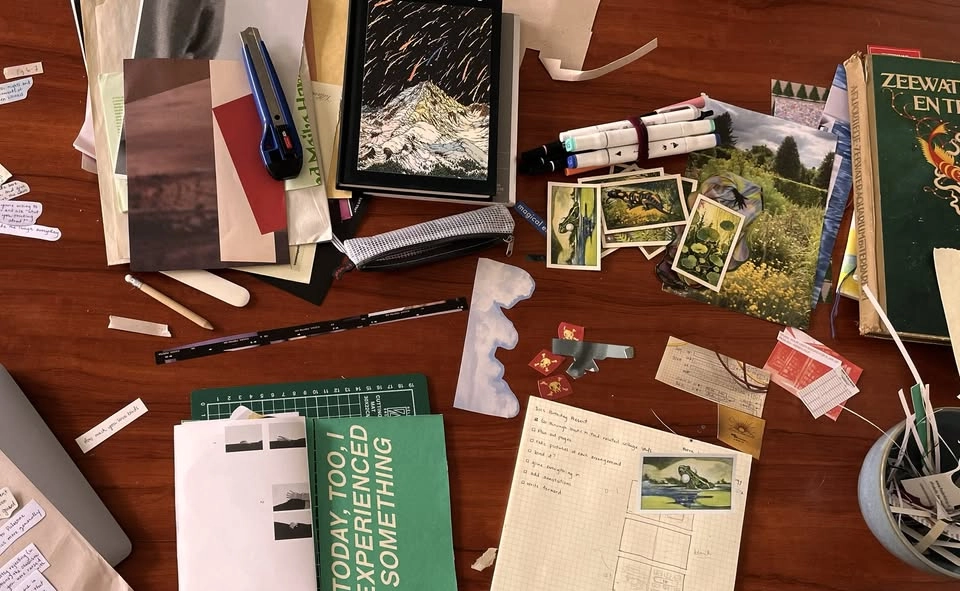
Pia's work inspires us to write letters to those dear to us—letters composed in a nomadic language, reaching across time to those we've come to love through photographs and pages. This gathering of stories, this drifting archive, sings a melody reminiscent of water droplets on a tree fern. It collects echoes of revolutionary dreams and memories of figures such as Rosa, Walter, and Ursula.
We find ourselves in motion, walking through the cloud forest, exploring an unknown city, retelling stories of dignity for the dispossessed. Each tale, whether of a girl attuned to the rhythm of the woods or a seed’s journey back across the ocean, reminds us of life’s unruly nature, enduring against all odds.
How do we tackle such hope? Dear F,
Your letter resonates with me, striking a chord that reflects my mood perfectly. This summer, I immersed myself in the writings of Sara Ahmed, navigating through feelings of disillusionment and a flicker of empowerment in saying NO to societal norms. Tending to my balcony plants provided a brief solace.
Reading your lovely notes on Pia’s work reminded me of Rosa Luxemburg’s fierce critique against warmongering. Despite her imprisonment, she dissects capitalism, challenging the language of convention to find words that resonate from heart to heart. Even from her confinement, she perceives early signs of ecological collapse—a struggle that feels so urgent and yet so distant.
Will we break this vicious cycle? In her way, Pia gently weaves these threads of revolutionary love, reminiscent of Rosa and Hannah Arendt’s poignant storytelling amidst sorrow. It’s a stark contrast to institutions that celebrate Arendt while perpetuating abuse of power.
Yes, things run in circles, but circles do eventually break.
Could this be the hope you seek? I believe it can be.
Pia Rönicke is a visual artist based in Copenhagen, who for over two decades has gathered narratives opposing the colonial and capitalist enclosures of life. Her projects intertwine various media across timelines, honoring the inexhaustible force of feminist and communal resistance. The Drifters’ Archive is an exhibition presented in two parts at Fuxia 2 and SIGNAL.
📍 Location: Monbijougatan 17H, SE-211 53 Malmö, Sverige
🎟️ Tickets: Event Link
Ubicación
Monbijougatan 17H, 211 53 Malmö
Cómo llegarDetalles




Ubicación
Monbijougatan 17H, 211 53 Malmö
Cómo llegar