Zagroda nr 8
Culture

Zagroda nr 8

SomoEventFinder

Better experience in the app

  • Get a reminder before the event starts
  • Save & share with friends
  • Discover similar events based on your taste

Date

Fri, Jan 1

Time

12:00 PM - 12:00 AM

Location

Swołowo 8

Price

Se websida

Website

Visit site

Get reminded

Choose when to get reminded by email.

About the event

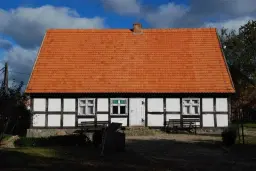
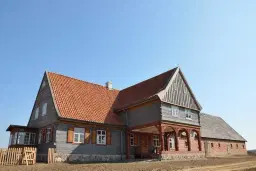
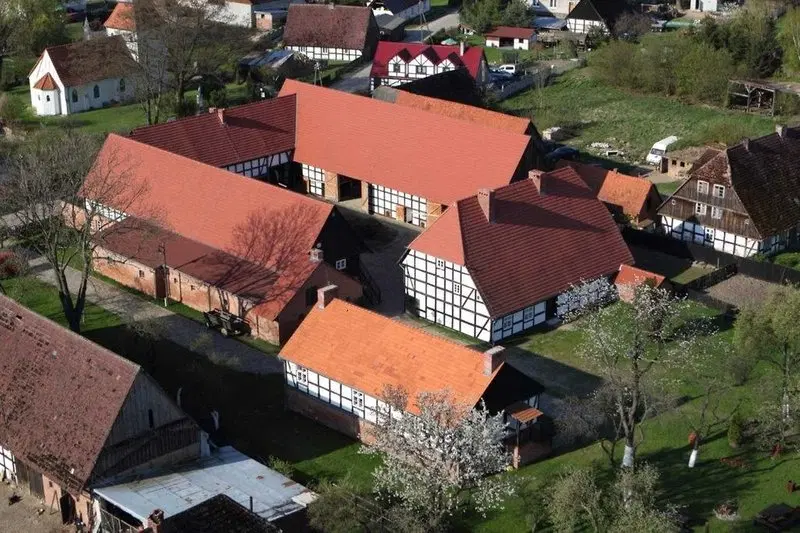
One of the homesteads that make up the Swołowo Museum of the Folk Culture of Pomerania.


Such homesteads were erected in Pomerania in the nineteenth and twentieth centuries, and their owners were wealthy middle-class peasants. The entrance to the enclosed courtyard is through a gate building. In the back there is a house, and the whole is enclosed on the sides by a barn and a livestock building. More or less in the middle of the courtyard of this type of farmhouse a manure pit is located. Behind the house stood the farm buildings and sheds for tools and agricultural equipment. There was also a vegetable and flower garden and an orchard.

From 1659 the farmstead remained in the hands of the Albrecht family, who arrived in Swołowo from the depths of Germany probably as early as the 15th or 17th century. The last farmers of that year were Gerard and Herda Albrecht. It was they who, on 10 May 1934, received an oak plaque of honour during a ceremony in Starków (honouring 131/121 families, including 9 from Swołów, who had settled in Pomerania for over 200 years). Everything changed after 1945. As a result of the Second World War, which was instigated by the Nazi Third Reich, there were mass population displacements throughout Europe. The defeat of Germany led to the conceding of this part of Pomerania to Poland and, from 1945, to the displacement of German inhabitants beyond the River Oder. They were replaced by settlers from various parts of Poland, including Masovia, Kielce, Lublin, as well as expatriates from the areas constituting the so-called Eastern Borderlands of the Second Republic, which Poland lost to the USSR after the war. The German inhabitants of Swołów, among them Gerard Albrecht with his wife Herda and daughter Minna, left the village and went to West Germany. The first Polish farmer in homestead no. 8 8 was Tadeusz Piecuski. As a former prisoner of the Stutthof concentration camp, he was given the opportunity by the authorities to settle one of the farms. The Piecuski family lived in the homestead until 1952. They could not withstand the harassment meted out to them by the communist authorities. At that time, they were treated like rich people, the so-called kulaks, and these were ruthlessly destroyed by the authorities. After them, the farm was taken over by Jan Kowalski and his family; they lived here until the end of the last century. The Middle Pomerania Museum took over the homestead in 2002.

The first of the buildings of the homestead is a barn from 1858 with a cellar. Inside it, in the outermost room, there are silage silos, an original wooden barrel for manure and old agricultural machinery (ploughs, cultivators, harrows). Other rooms are set up with machinery for processing crops: choppers, threshing machines, a grinder, a windrower. The barn is also used to store hay and food for the animals and grain. The cellar was used to store potatoes, swedes and beetroot, among other things. Adjacent to the barn are a well and a chicken coop where chickens of various breeds, including green-legged hens, are kept.

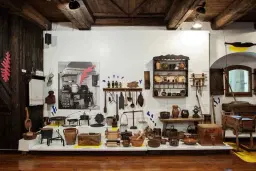
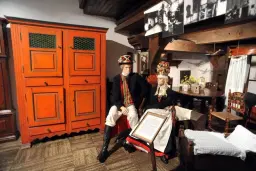
The most important element of the homestead is, of course, the more than 150-year-old dwelling house, characteristic of a rich Pomeranian farmer. The interiors have been recreated with great care on the basis of accounts from both the former German inhabitants of Swołów and the first Polish settlers. The exhibits do not come from the house itself, but are from the area of Swołów and its immediate surroundings. In the house one can see the reeve's office, the parade room - living room, bedroom, cellar next to the bedroom, kitchen, larder, hallway, Altenteil - the part for the old ones - the area separated by a hallway from the one inhabited by the young farmers, usually belonging to their parents who handed down the property to them: kitchen, bedroom and parade room - living room.

The barn combines its original function with museum activities. Horses, sheep, goats and geese and ducks are reared in the lower part of the building. In the gallery, in turn, two exhibitions are presented. The first is Brewing in Swołów, which is an exhibition about beer, which was a popular drink in Central Pomerania in former centuries and consumed on many occasions. The second exhibition is Pomeranian Cuisine, which is about the equipment of the former Pomeranian kitchen: household appliances needed to prepare food and preserves. A curiosity here are the antique wooden moulds for gingerbread and butter.

The building originally intended for seasonal workers of the Albrecht family now houses a restaurant serving traditional Pomeranian goose dishes, the Swołowo Inn, which is open daily in high season. A garden is also open to visitors, with old fruit trees: cherries, apple and pear trees, as well as vegetables and flowers. For the youngest visitors there is a playground with wooden swings, rockers and toys. In spring and summer, outdoor events, family picnics and music festivals are held here. For organised groups, the garden is made available for meetings, team-building events, and bonfires are organised for children and school groups. The museum also owns 1 hectare of agricultural land adjacent to this farmstead - horses and sheep graze here.

NOTE: We cannot guarantee the accuracy of the information we provide about this event. Visit the event's website to verify details such as date, opening hours, prices and location.

This week in Sverige

More events in Sverige