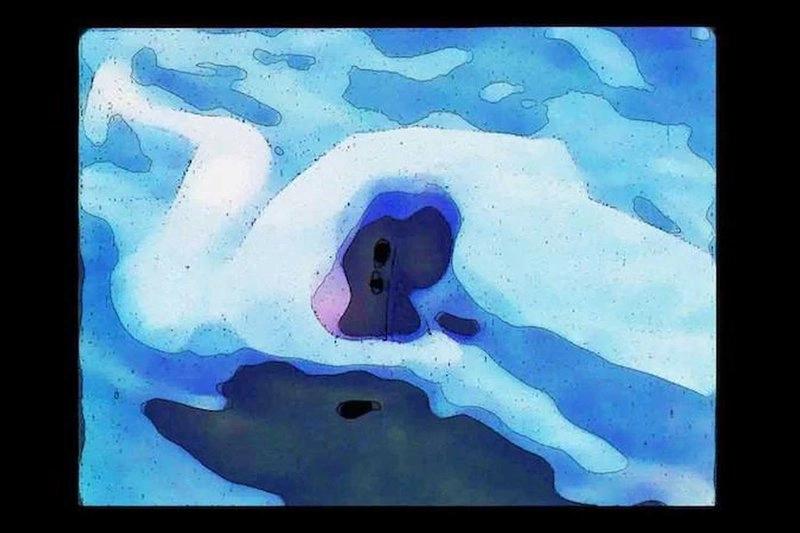
Distorted Session #8: Zaostřeno na Slovensko
The eighth installment in the series of accompanying programs for the Distorted Image exhibition will take a closer look at the Slovak art scene. The work of digital art pioneer Vladimír Havrilla and experimental filmmaker Ľubomír Ďurček will be presented by František Zachoval, director of the Gallery of Modern Art in Hradec Králové, and theorist and curator Ján Kralovič. The event will take place on Wednesday, June 24, 2026, at 5 p.m. at the House of Art on Malinovského Square.
Tickets can be purchased in advance on GoOut (sales begin June 8) or at the House of Art box office.
Event Info<br>
Through guided screenings, we will take a closer look at the work of two Slovak artists featured in the Distorted Image exhibition. František Zachoval from the Academy of Fine Arts and Design in Hradec Králové will present the work of sculptor, painter, experimental filmmaker, and digital art pioneer Vladimír Havrilla (*1943), who was a key figure in Bratislava’s independent art scene in the 1970s. Under the pseudonym Roberta Weinerová, he published samizdat literature. Since 1996, he has focused on 3D modeling and computer animation, in which he combines a sculptor’s vision with new technologies. He has exhibited his works at many prestigious domestic and international exhibitions, including Works and Words at the De Appel gallery in Amsterdam and the EXPO ’92 world’s fair in Seville.
Theorist Ján Kralovič from the Academy of Fine Arts and Design in Bratislava will present the work of Slovak conceptual and action artist, performer, and experimental filmmaker Ľubomír Ďurček (1948–2025). In the late 1970s and early 1980s, Ďurček collaborated with the Labyrint Theater and Ján Budaj’s Temporary Society of Intensive Experience. In his film work, he focused on communication and interpersonal relationships; his films were often based on group performances and happenings he initiated. He also created photographs, text-based works, and artist’s books. His works have been presented at numerous exhibitions in Slovakia and internationally.
JÁN KRALOVIČ studied Art and Cultural History at the Faculty of Arts of Trnava University in Trnava. From 2012 to 2016, he worked as a research fellow at the Academy of Fine Arts and Design in Bratislava. He currently works at the Department of Art History and Theory at the Academy of Fine Arts and Design. He occasionally engages in curatorial work. In 2014, he published Teritórium ulica (Art Actions in Urban Space in Slovakia, 1965–1989), and in 2017, a monograph focused on apartment exhibitions and artistic activities during the Normalization period titled Majstrovstvo za dverami. In 2024, he and his colleague Daniel Grúň published a book on contemporary thinking about curatorship and exhibitions titled Pohyb za obrazmi. Together with Barbora Špičáková, he is co-editor of a publication on the book series Slovenská poézia and Otvorené okná (2025).
FRANTIŠEK ZACHOVAL has been the director of the Gallery of Modern Art in Hradec Králové since 2019. He studied monumental art at the Academy of Fine Arts in Prague. He is a co-founder of the online television channel Artyčok, and from 2015 to 2019 he served as director of the Czech Center in Bucharest. He focuses on current socio-political themes, the development of the moving image, and artistic expressions in Central Europe since the 1970s. He serves as the artistic director of the gallery’s Central and Eastern Europe Series, which has published works by Aliza Ložkina, Edit András, and Piotr Piotrowski. He has edited the publicationsThe Art of Interaction(Hradec Králové, 2025) andOriginal? The Art of Imitating Art (Hradec Králové, 2022). He is currently preparing a publication dedicated to the film work of Vladimír Havrilla.
About the Exhibition<br>
Exhibition design: Kateřina Radakulan
The exhibition explores the origins of video art in the former Czechoslovakia, as well as in Poland and Hungary. It covers the period from the late 1960s to the mid-1990s. The selection of key events and artworks cannot be separated from the overall social and political context, which largely determined access to technology, methods of working with video imagery, and the possibilities for sharing it. Using examples of works from various countries, the exhibition inspires viewers to seek out differences as well as parallels and points of connection.
The exhibition features experimental films, recordings of performances and events, and early animations, which round out the overall picture of the development of this art form. An important part of the exhibition consists of independent video magazines and news reports on politics and culture distributed on videotapes (including Originální Videojournal, Videomagazín Vokna, Videomagazín Karla Kyncla, and Infermental). In addition to single-channel video, the exhibition features various forms of video installations and video sculptures, many of which have been preserved only in documentation.

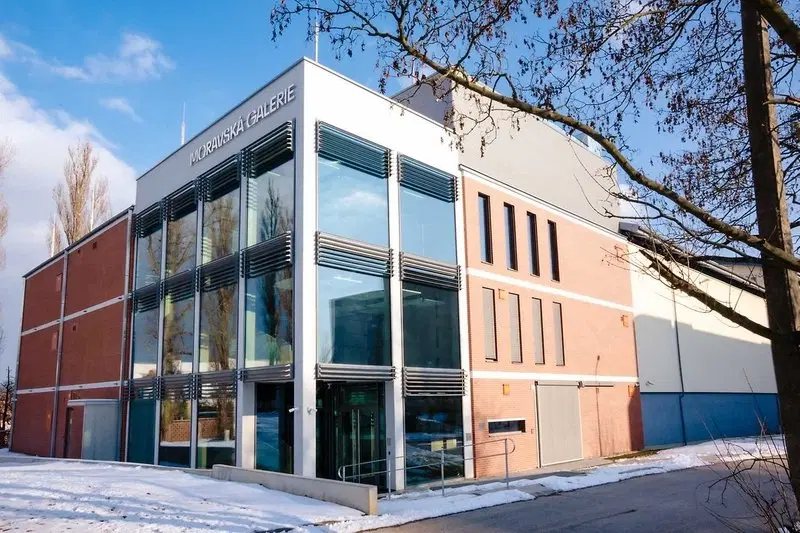

Malinovského náměstí 2
Get directions